


One pot vegetable curry is the kind of weeknight dinner that earns a permanent spot in your regular rotation. It is rich, hearty, and full of flavor without requiring a long ingredient list or complicated technique. If you have been looking for a simple, satisfying meal that practically makes itself, this is the one.
I started making this curry after a family member brought it over for dinner one night, and I was surprised by how deeply flavorful it tasted for something so straightforward. A jar of Indian simmer sauce does the heavy lifting on the spice blend, so all you have to do is chop some vegetables and let everything simmer together. If you enjoy bold, comforting meals like this chicken curry, you are going to love having a vegetarian version in your lineup too.
Table of Contents
Ingredients for One Pot Vegetable Curry
I have tested this one pot vegetable curry enough times to know that keeping it simple is exactly what makes it work. The ingredients are easy to find and the whole dish comes together without any fuss. Here is what you need:
- 2 tsp oil
- 1 medium onion (chopped)
- 1 head cauliflower (cut into similar-size florets) – Pro tip: uniform pieces cook more evenly and prevent some from going mushy while others stay firm
- 3 medium carrots (peeled and chopped into bite-size pieces)
- 2 zucchini (split lengthwise, then sliced into half-moon pieces)
- 10 to 15 oz store-bought Indian simmer sauce – I recommend checking the Asian aisle or near the pasta sauces; tikka masala, madras, and korma all work great
- 14 oz coconut milk – In my experience, light coconut milk delivers the same creamy result and keeps the dish a little lighter
- Salt and pepper to taste
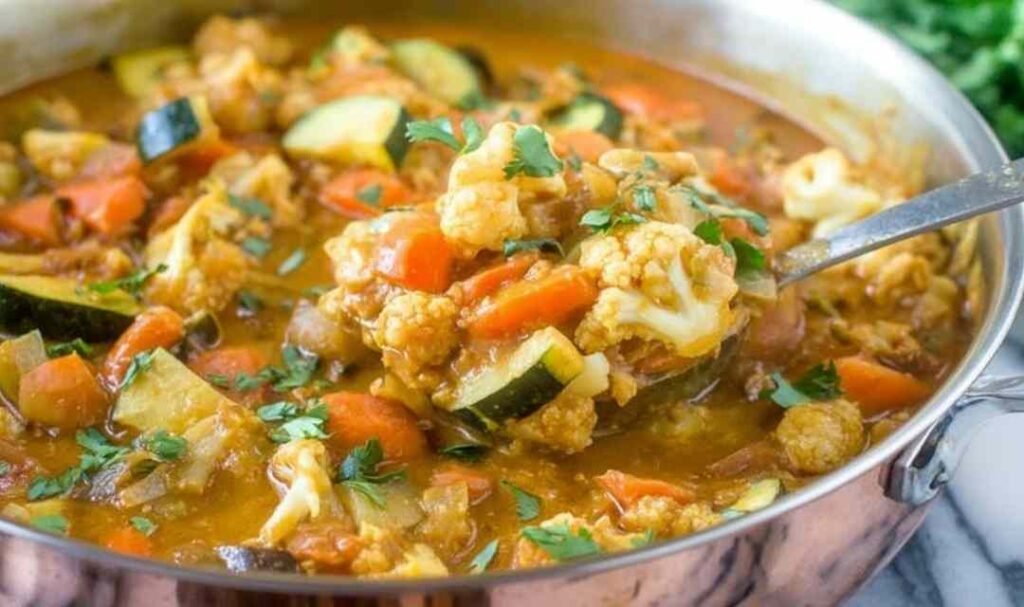
Step-by-Step Instructions
I recommend reading through all the steps before you start so everything flows without stopping. This curry moves along quickly once the vegetables hit the pot.
Step 1: Heat 2 tsp of oil in a large pot or Dutch oven over medium heat. Wait until the oil is shimmering but not smoking, then add the chopped onion. Cook for 3 to 4 minutes, stirring occasionally, until softened and translucent. Do not rush this step as it builds the base flavor.
Step 2: While the onion cooks, chop the cauliflower into florets. Keep them roughly the same size so they cook at an even rate. Add the cauliflower to the pot and stir to combine.
Step 3: Peel and chop the carrots into bite-size pieces, then add them to the pot. Stir everything together so the vegetables start mixing with the softened onion.
Step 4: Split the zucchini lengthwise, then slice into half-moon pieces. Add to the pot and stir to combine all the vegetables.
Step 5: Pour in the Indian simmer sauce and coconut milk. Stir well to coat all the vegetables evenly. Bring the mixture to a boil over medium-high heat, watching so it does not boil over.
Step 6: Once boiling, reduce the heat to medium-low and cover the pot. Simmer for 20 to 30 minutes, or until all the vegetables are fork-tender. Check the carrots and cauliflower since they take the longest.
Step 7: Taste and season with salt and pepper. Serve hot over steamed rice or with warm naan.
What to Serve with One Pot Vegetable Curry
The best sides for one pot vegetable curry are ones that soak up that rich, creamy sauce or add a fresh contrast to balance the warmth of the spices.
Steamed Basmati or White Rice: The most natural pairing. Fluffy rice soaks up the curry sauce beautifully and keeps every bite satisfying. Try this cilantro lime rice as a fun twist that adds a bright, fresh note alongside the curry.
Cauliflower Rice: A great low-carb option that still captures all that saucy goodness. It adds a light, mild base that lets the curry flavors take center stage. This sheet pan honey chipotle salmon with cauliflower rice shows just how well cauliflower rice works as a base for bold, saucy dishes.
Warm Naan Bread: Perfect for scooping every last bit of sauce from the bowl. Soft naan adds a satisfying chew and makes the meal feel a little more special on a weeknight.
Vegan Buddha Bowl: For a nutrient-packed spread, serve smaller portions of the curry alongside a vegan buddha bowl loaded with grains and fresh vegetables for a complete plant-based dinner.
Creamy Mulligatawny Soup: If you are hosting a dinner with an Indian-inspired theme, starting with a bowl of creamy mulligatawny soup before the curry makes for a cozy and cohesive meal.
Basil Chicken in Coconut Curry Sauce: For nights when you want to serve both a vegetarian and a protein option at the table, this basil chicken in coconut curry sauce pairs perfectly alongside the vegetable curry.
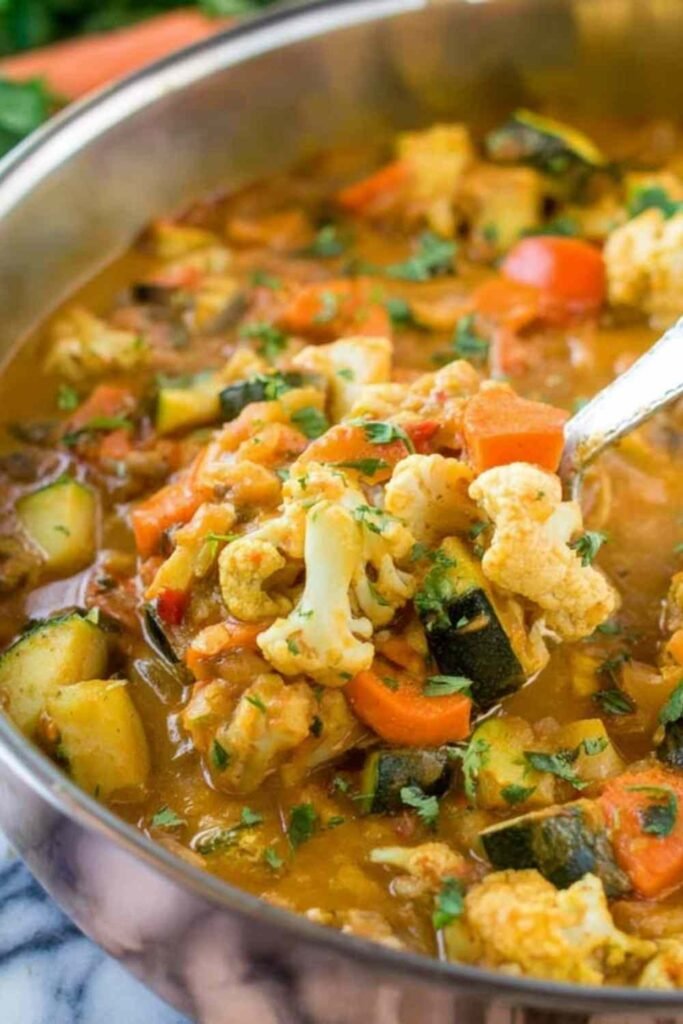
Storage and Serving Tips
Leftover one pot vegetable curry keeps well in an airtight container in the refrigerator for up to 4 days. The flavors actually deepen overnight, so it often tastes even better reheated the next day for lunch.
To reheat, warm it on the stovetop over medium heat, stirring occasionally, until heated through. Add a small splash of water or coconut milk if the sauce has thickened too much during storage. The microwave also works in 60-second intervals, stirring between each one.
I recommend making a double batch when you have the time. This curry freezes well for up to 3 months in a freezer-safe container. Thaw overnight in the fridge before reheating for best texture results.
FAQs
Can I use a different brand of Indian simmer sauce?
Yes, any store-bought Indian simmer sauce works here. Tikka masala, madras, and korma are all reliable options. Choose based on how spicy or mild you want the finished dish.
Can I add protein to this vegetable curry?
Absolutely. Chickpeas, cubed firm tofu, or cooked chicken breast all work well. Stir them in when you add the sauce so they have time to absorb the curry flavors during simmering.
What other vegetables can I use?
This recipe is flexible. Sweet potatoes, broccoli, green beans, and bell peppers all work great. Cut everything into similar-size pieces so it cooks evenly, and keep firmer vegetables like sweet potato in smaller cubes since they take longer to soften.
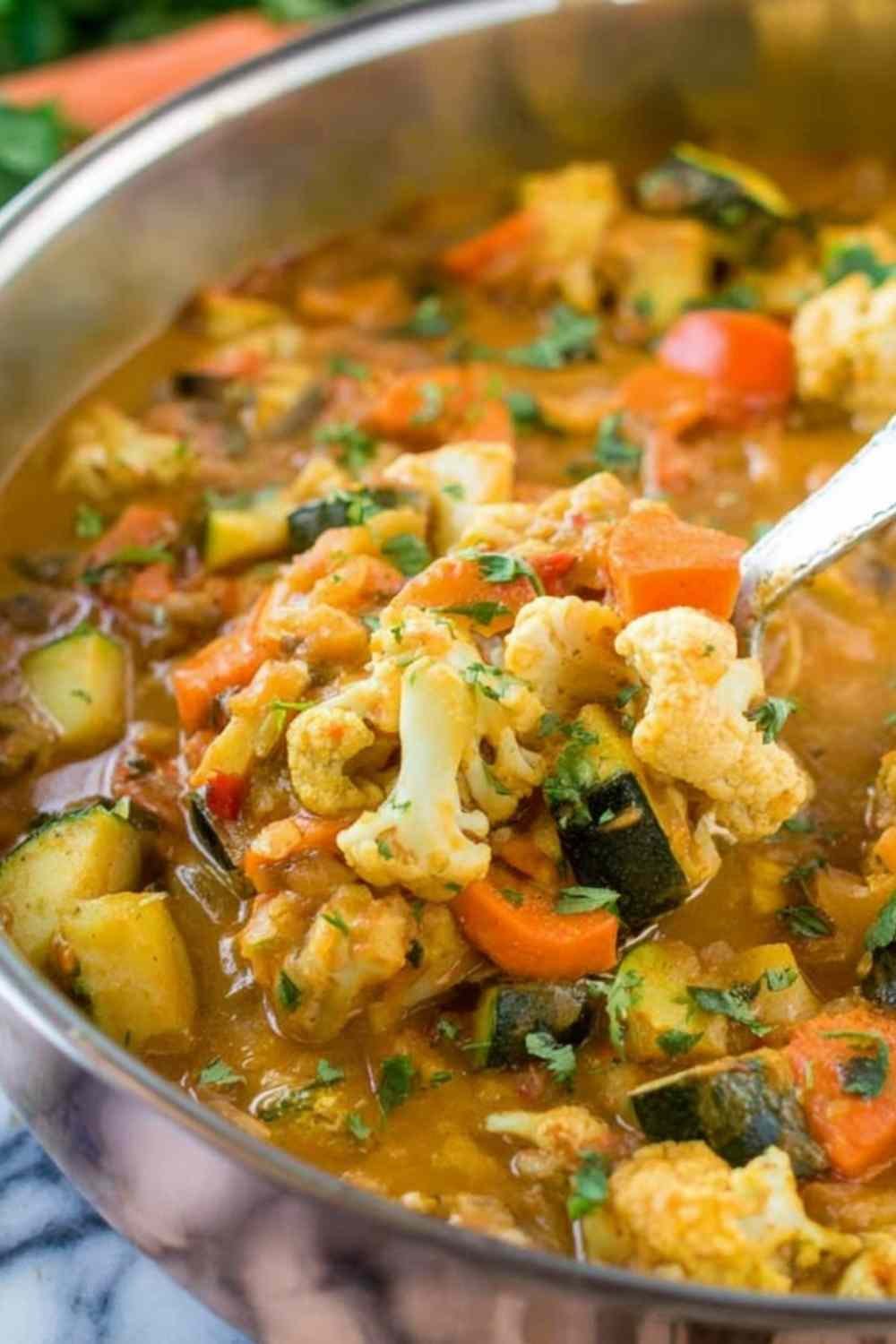
6-Ingredient One-Pot Vegetable Curry
Ingredients
Equipment
Method
- Heat 2 tsp of oil in a large pot or Dutch oven over medium heat. Wait until the oil is shimmering but not smoking, then add the chopped onion. Cook for 3 to 4 minutes, stirring occasionally, until softened and translucent.
- While the onion cooks, chop the cauliflower into florets of roughly the same size. Add to the pot and stir to combine with the onion.
- Peel and chop the carrots into bite-size pieces. Add to the pot and stir everything together.
- Split the zucchini lengthwise, then slice into half-moon pieces. Add to the pot and stir to combine all the vegetables.
- Pour in the Indian simmer sauce and coconut milk. Stir well to coat all the vegetables. Bring the mixture to a boil over medium-high heat.
- Once boiling, reduce the heat to medium-low and cover the pot. Simmer for 20 to 30 minutes, or until all the vegetables are fork-tender. Check the carrots and cauliflower since they take the longest.
- Taste and season with salt and pepper. Serve hot over steamed basmati rice or with warm naan bread.