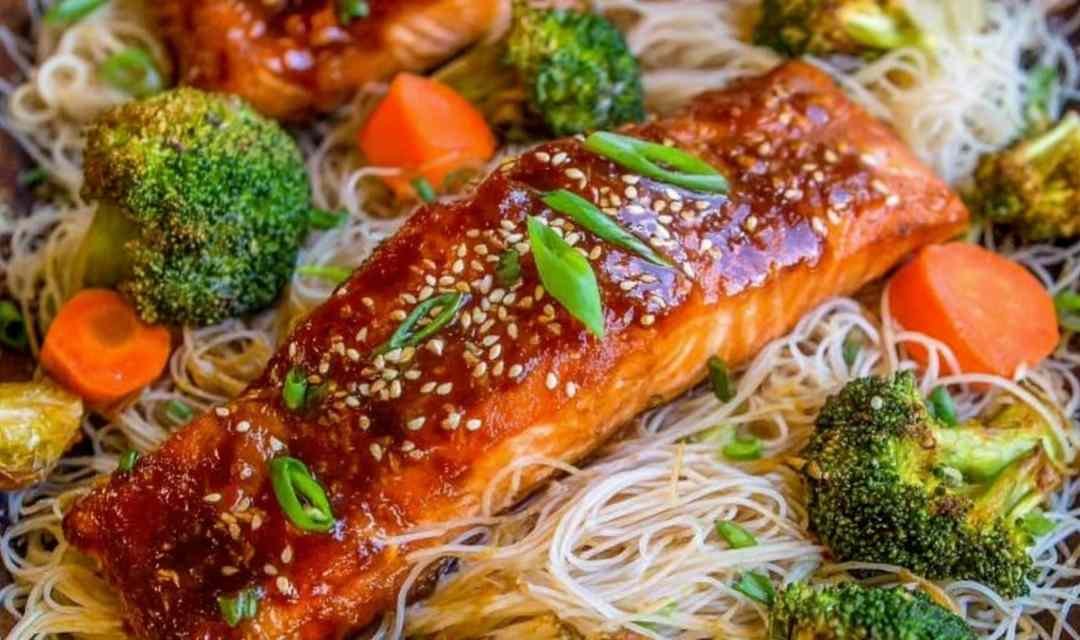

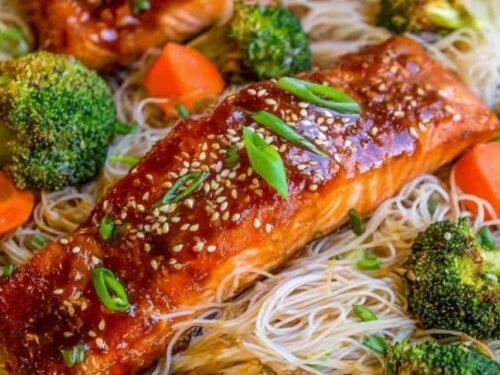
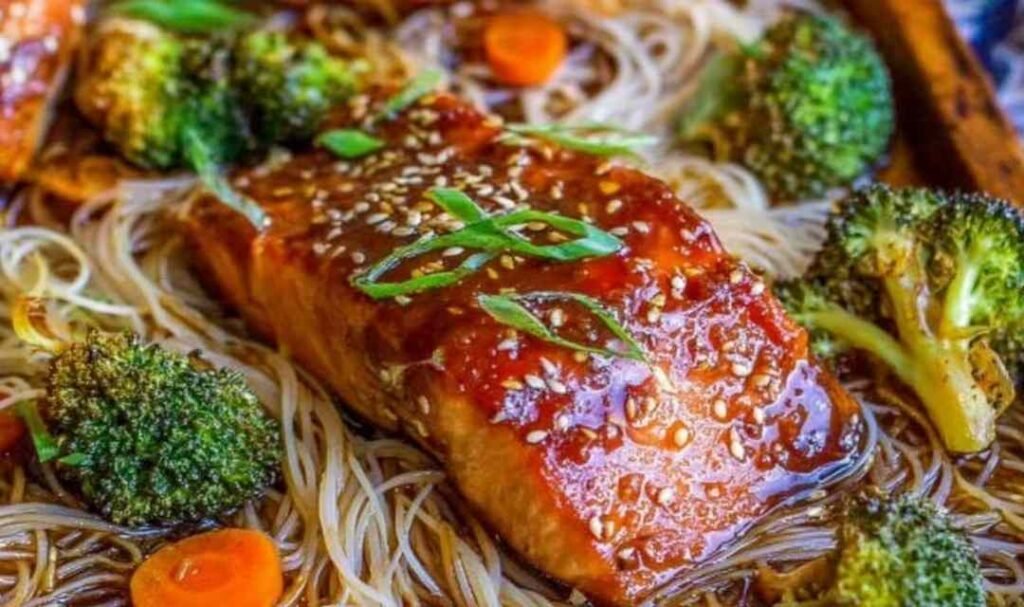
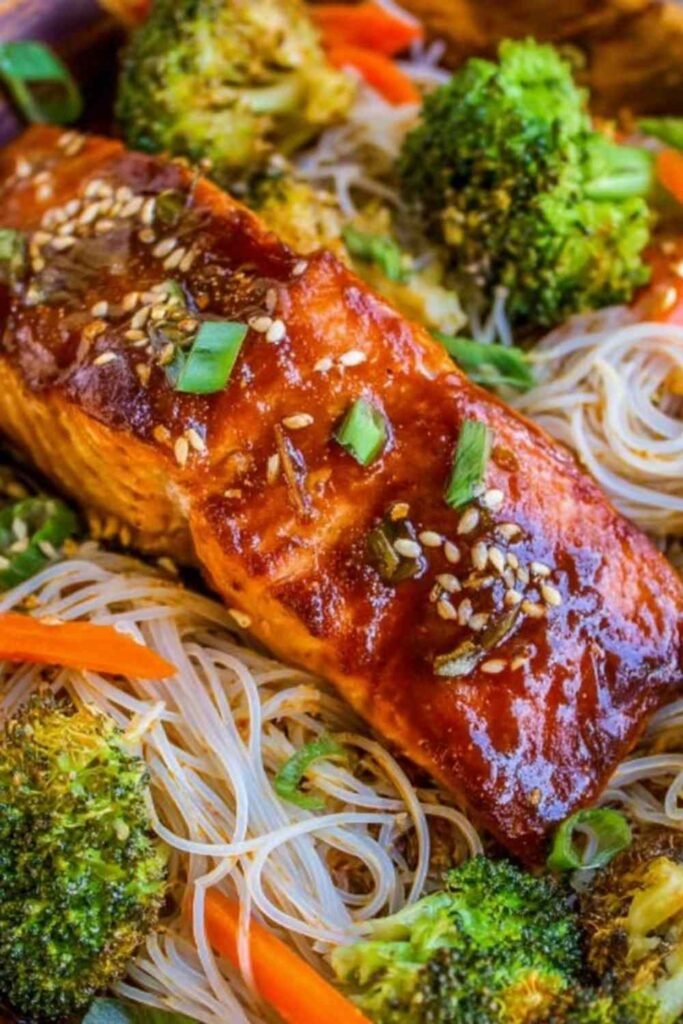
Sheet pan Asian salmon with broccoli is one of those weeknight dinners that genuinely surprises you. Tender salmon, crisp-roasted vegetables, and savory rice noodles all come together on one pan in about 40 minutes. I make this regularly because cleanup is almost nothing and the flavor is anything but boring.
I still remember the first time I tossed broccoli and carrots in that soy-ginger sauce and slid the whole thing into the oven. The smell coming from the kitchen had everyone asking what was for dinner before the timer went off. This sheet pan Asian salmon recipe works because every component cooks together, the sauce does all the heavy lifting, and the rice noodles soak up every last drop.
Table of Contents
Ingredients for Sheet Pan Asian Salmon with Broccoli
I have made this enough times to know exactly what makes it work. Fresh ginger and real garlic are the two things I never skip here because they give the sauce that bold, restaurant-style depth you just cannot get from a bottle. Here is everything you need:
For the Sauce
- 1/4 cup rice vinegar
- 1 tbsp cornstarch
- 1 tbsp brown sugar
- 6 tbsp soy sauce – I recommend low-sodium if you are sensitive to salt
- 1 tbsp sesame oil – my preference is toasted sesame oil for a richer, nuttier flavor
- 1 tsp Sriracha sauce
- 1/2 tsp crushed red pepper flakes
- 1 tbsp minced garlic (about 3 cloves) – I always use fresh, not the jarred kind
- 1 tbsp fresh ginger, minced – in my experience, fresh ginger makes a noticeable difference over powder
For the Sheet Pan
- Oil for the pan
- 2 heads broccoli, cut into bite-size florets
- 4-5 medium carrots, sliced thin (no more than 1/4 inch thick)
- 1 tsp salt (for the vegetables)
- 2 (16-oz) packages frozen Asian-rubbed salmon filets – pro tip: use them straight from frozen, no thawing needed
- 1 tsp salt (for the noodles)
- 1 (6-oz) package thin rice noodles (also called rice sticks)
To Garnish
- 1/2 cup green onions, chopped
- 3 tbsp toasted sesame seeds
- 1/2 cup fresh cilantro, chopped
Step-by-Step Instructions
In my experience, the key to this recipe is making sure the vegetables get a good toss in the sauce before anything else goes on the pan. Follow these steps and it comes together without stress.
Step 1: Preheat your oven to 400 degrees F.
Step 2: In a glass measuring cup, whisk together all sauce ingredients: rice vinegar, cornstarch, brown sugar, soy sauce, sesame oil, Sriracha, red pepper flakes, garlic, and ginger until fully combined. Set aside.
Step 3: Lightly coat a large rimmed sheet pan with oil or nonstick spray.
Step 4: Add the broccoli florets and sliced carrots to the pan. Pour 1/2 cup of the prepared sauce over the vegetables and use your hands or tongs to toss and coat everything evenly. Sprinkle with 1 tsp salt. Spread into an even layer so nothing steams or crowds.
Step 5: Place the frozen salmon filets directly onto the pan, making sure each piece is flat against the pan surface and not resting on top of the vegetables. This ensures even cooking and a better texture on the bottom of the fish.
Step 6: Roast for 12 minutes.
Step 7: Remove the pan from the oven. Stir and flip the vegetables as best you can without breaking them up too much. Do not move or disturb the salmon at all. Return the pan to the oven quickly to hold the heat.
Step 8: Roast for another 10-12 minutes until the broccoli edges are slightly golden and the carrots are crisp-tender. The salmon should flake easily with a fork and reach an internal temperature of 145 degrees F. If your filets are thick, give it the full 12 minutes.
Step 9: While the salmon finishes in the oven, bring a medium pot of water to a boil. Add 1 tsp salt, then turn off the heat completely. Add the rice noodles and let them sit undisturbed for 5-8 minutes until tender. Drain well.
Step 10: Toss the drained noodles with about half of the remaining sauce. Taste and adjust. Reserve the rest of the sauce to pass at the table for anyone who wants more.
Step 11: Plate the noodles and top with salmon and roasted vegetables. Garnish with green onions, toasted sesame seeds, and fresh cilantro. Serve the remaining sauce warm on the side.
What to Serve with Sheet Pan Asian Salmon
The bold soy-ginger flavors in this dish pair well with light, clean sides that balance the richness of the salmon without competing with it.
Steamed Jasmine Rice: A bowl of fluffy jasmine rice soaks up the extra sauce beautifully and rounds out the meal for bigger appetites. It is the easiest way to stretch this dinner for a larger group.
Cilantro Lime Rice: This bright, herby rice is one of my favorite pairings with Asian salmon. The citrus cuts right through the soy-ginger glaze and keeps every bite feeling fresh.
Spicy Salmon Bowl: If you want to turn leftovers into something completely different the next day, break the salmon apart and build a bowl. It works so well.
Honey Glazed Salmon Bowl: For a sweeter spin on a similar idea, this glazed salmon bowl uses pantry staples and is just as easy to pull together on a weeknight.
Broccoli and Mushroom Stir Fry: If your family loves the roasted broccoli in this recipe, this stir fry is a great companion dish or a meatless side that adds variety to the plate.
Glow Bowl: This nourishing bowl is a great lighter option to serve alongside or use as a base for the leftover salmon. The fresh vegetables and clean dressing are a natural match.
10-Minute Wonton Soup: A small bowl of wonton soup on the side turns this into a full Asian-inspired spread that feels special without any extra effort.
Thai Peanut Lettuce Wraps: Start dinner with these as a light appetizer and you have a complete Asian-inspired meal from start to finish. The peanut sauce adds a fun contrast to the soy-ginger glaze.
Storage and Serving Tips
Store leftover salmon, vegetables, and noodles separately in airtight containers in the refrigerator for up to 3 days. Keeping them in separate containers prevents the noodles from absorbing all the moisture and getting soft overnight.
To reheat, I recommend warming the salmon and vegetables in a 350 degree oven for about 8-10 minutes or in a skillet over medium heat with a small splash of water to prevent sticking. Reheat the noodles separately with a tiny drizzle of sesame oil to revive the texture. Try to avoid microwaving the salmon directly since it tends to dry out quickly.
Pro tip: leftover salmon is genuinely great eaten cold. Flake it over a green salad and drizzle the reserved sauce on top as your dressing. It is one of my favorite easy lunches the next day.
Frequently Asked Questions
Can I use fresh salmon instead of frozen?
Yes. If using fresh or thawed salmon filets, marinate them in about 1/3 of the sauce for 20 minutes first. Start the vegetables alone in the oven for the first 12 minutes, then add the salmon directly to the pan and roast for another 12-15 minutes until cooked through.
Can I leave out the cornstarch in the sauce?
You can. The cornstarch adds a slightly thicker consistency to the sauce when it hits the hot pan, but the recipe works perfectly without it. Just skip it and whisk the remaining sauce ingredients together as usual.
What if I cannot find Asian-rubbed salmon at the store?
Use any plain frozen salmon filets and season them with a pinch of salt and pepper. Reserve a bit of the sauce you make and spoon it directly over the salmon before roasting. You will get the same bold flavor with no specialty product needed.
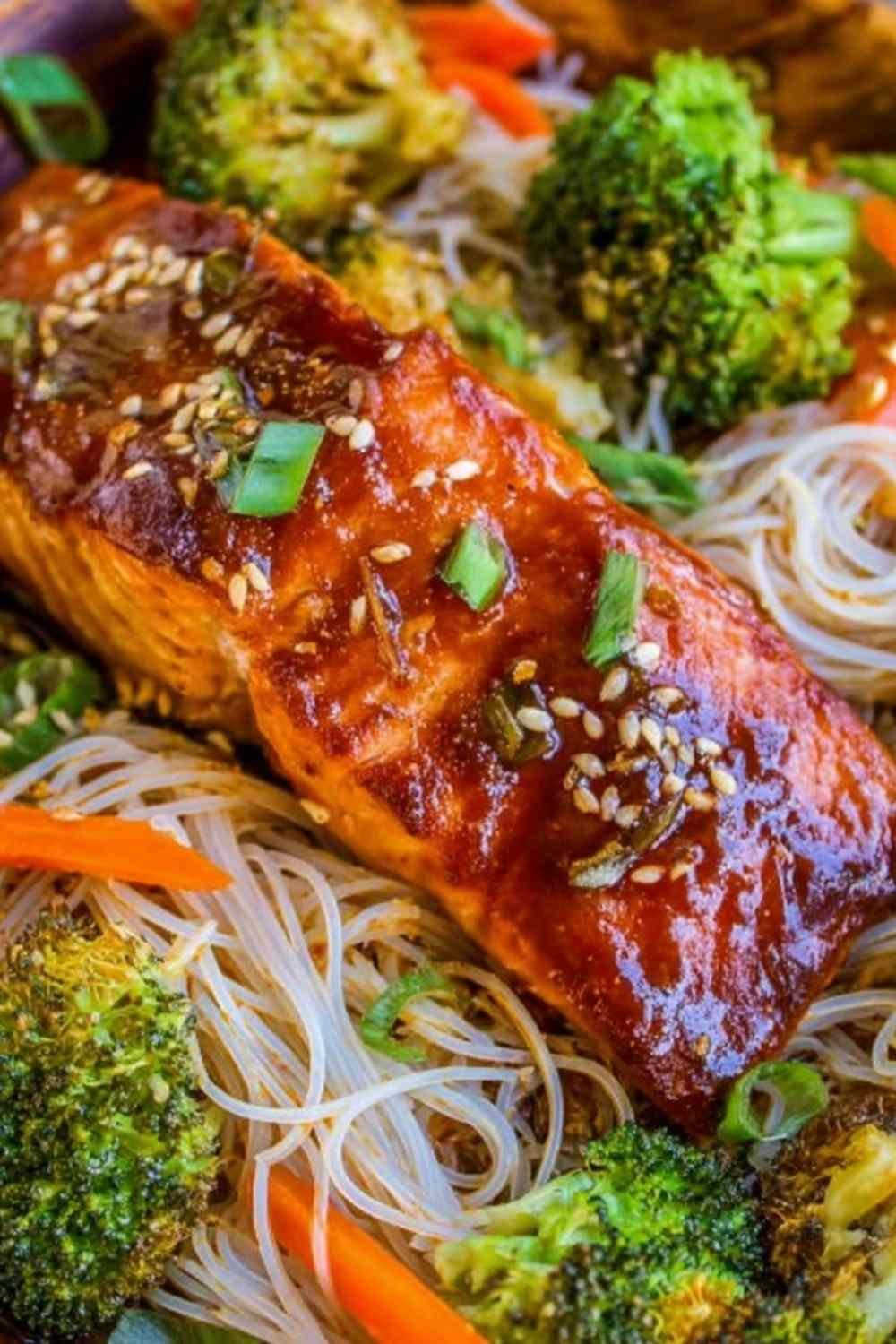
Sheet Pan Asian Salmon with Broccoli, Carrots, and Rice Noodles
Ingredients
Equipment
Method
- Preheat your oven to 400 degrees F.
- In a glass measuring cup, whisk together rice vinegar, cornstarch, brown sugar, soy sauce, sesame oil, Sriracha, red pepper flakes, garlic, and ginger until fully combined. Set aside.
- Lightly coat a large rimmed sheet pan with oil or nonstick spray.
- Add broccoli florets and sliced carrots to the pan. Pour 1/2 cup of the prepared sauce over the vegetables and toss to coat evenly. Sprinkle with 1 tsp salt. Spread into an even layer.
- Place the frozen salmon filets directly onto the pan, making sure each piece is flat against the pan surface and not resting on top of the vegetables.
- Roast in the preheated oven for 12 minutes.
- Remove the pan from the oven. Stir and flip the vegetables without disturbing the salmon. Return the pan to the oven quickly.
- Roast for another 10-12 minutes until the broccoli edges are slightly golden, the carrots are crisp-tender, and the salmon reaches an internal temperature of 145 degrees F.
- While the salmon finishes, bring a medium pot of water to a boil. Add 1 tsp salt, turn off the heat, add the rice noodles, and let sit undisturbed for 5-8 minutes until tender. Drain well.
- Toss the drained noodles with approximately half of the remaining sauce. Reserve the rest to serve at the table.
- Plate the noodles and top with salmon and roasted vegetables. Garnish with green onions, toasted sesame seeds, and fresh cilantro. Serve extra sauce warm on the side.